Evaluating Hummingbird Illustration Assets for Professional Design Projects
Visual assets play a critical role in defining the tone and quality of modern design projects. Among nature-inspired motifs, the Hummingbird Illustration has emerged as a versatile and highly sought-after element due to its association with agility, beauty, and delicate precision. For designers, educators, and brand managers, selecting the right visual library is not merely an aesthetic choice but a strategic decision that impacts workflow efficiency, print quality, and brand consistency.
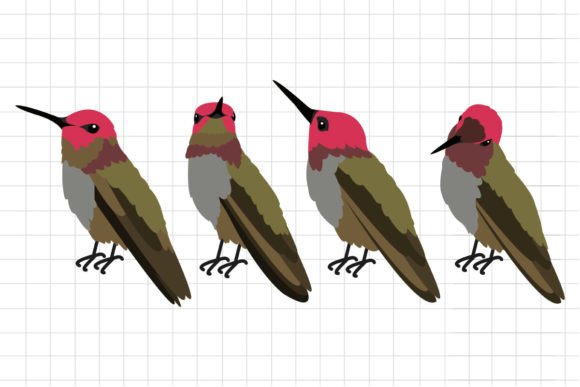
This analysis explores the specific value proposition of vector-based hummingbird collections, such as the "Hello and Welcome" set, evaluating their technical specifications, use cases, and suitability for various professional applications. By understanding the nuances of these assets, stakeholders can make informed decisions about when to utilize pre-made vector libraries versus custom illustration services.
Technical Specifications and Format Versatility
The foundation of any high-quality digital asset lies in its file format and resolution. The distinction between raster and vector graphics is particularly relevant when evaluating hummingbird illustrations for scalable applications. A robust collection typically provides multiple formats to accommodate different stages of the design process, from initial sketching to final production.
- Vector Formats (AI and EPS): These are essential for scalability. Unlike pixel-based images, vector files use mathematical equations to define shapes, allowing them to be resized infinitely without loss of quality. This makes AI and EPS formats ideal for large-format prints, such as billboards or wall murals, where detail must remain crisp. Furthermore, these formats are fully editable, enabling designers to modify colors, adjust line weights, or isolate specific elements like wings or tails.
- High-Resolution Raster (300 DPI JPG): While vectors offer flexibility, there are instances where a ready-to-use bitmap is preferred. A 300 DPI JPEG ensures that the image is suitable for standard printing processes, including brochures, business cards, and web banners. This dual-format approach allows users to choose between maximum editability and immediate usability.
When comparing this technical setup to other options, it becomes clear that a collection offering both editable vectors and high-res previews offers superior utility. Many free or low-cost alternatives may only provide low-resolution PNGs, which limit their application to digital screens or small-scale prints. The inclusion of 100 editable elements within a single package significantly reduces the time required to create unique compositions, a key factor for agencies managing tight deadlines.
Comparative Analysis: Vector Libraries vs. Custom Illustration
Designers often face a choice between purchasing a curated vector library and commissioning a custom artist. To determine which path is appropriate, one must evaluate cost, speed, and uniqueness.
Speed and Cost Efficiency
A comprehensive set like the "Hello and Welcome" hummingbird collection provides immediate access to over 100 distinct variations. For projects requiring rapid turnaround—such as seasonal greeting cards or last-minute event invitations—this accessibility is invaluable. In contrast, custom illustration involves a lengthy process of briefs, sketches, revisions, and final delivery, which can take weeks and incur higher costs.
Uniqueness and Brand Differentiation
The primary trade-off with stock or template-based libraries is potential overuse. If a brand uses the same popular hummingbird set as its competitors, the visual identity may lack distinctiveness. However, because the assets are editable, designers can manipulate the vector paths to create derivative works that feel unique. This hybrid approach allows brands to benefit from the speed of templates while maintaining a degree of originality through customization.
Application Scenarios and Industry Fit
The versatility of hummingbird illustrations extends across multiple industries. Understanding where these assets fit best helps in evaluating their return on investment.
Educational Materials
In the educational sector, clarity and engagement are paramount. Hummingbirds are frequently used in biology textbooks, children’s learning apps, and science kits to represent concepts like pollination, flight mechanics, and biodiversity. The clean lines and cute aesthetic of vector illustrations make complex biological structures easier for younger audiences to digest. The ability to edit colors allows educators to align illustrations with specific curriculum themes or branding guidelines.
Stationery and Greeting Cards
The "Hello and Welcome" theme suggests a natural fit for stationery products. Hummingbirds symbolize joy, resilience, and good luck, making them appropriate for welcome gifts, baby showers, and housewarming cards. The high-resolution JPG output ensures that fine details are preserved during the printing process, which is crucial for premium card stocks. Additionally, the vector files allow printers to scale designs for larger formats, such as posters or banners, without pixelation.
Packaging and Ceramics
For product packaging, especially in the ceramics, paper goods, and giftware sectors, visual appeal drives consumer attention. A cohesive set of hummingbird illustrations can unify a product line. The editability of the AI/EPS files is particularly useful here; designers can extract individual birds to place on different parts of a package or combine them with typography seamlessly. This flexibility supports the creation of mini-cards, tags, and stickers, which are often used as add-ons or promotional items.
Digital Branding and Web Design
In the digital space, lightweight yet sharp graphics are preferred for fast loading times. SVG exports derived from AI/EPS files are perfect for web use. Brands can use hummingbird motifs as icons, decorative dividers, or background elements. The "cute" style mentioned in the collection description appeals to lifestyle brands, wellness companies, and creative agencies looking to convey a sense of approachability and elegance.
Evaluating Limitations and Considerations
While vector collections offer numerous advantages, they are not a universal solution. It is important to consider the limitations before integrating them into a project.
- Stylistic Consistency: Pre-made sets often have a fixed artistic style. If a brand’s existing visual identity leans toward photorealism or abstract minimalism, a "cute" vector style may clash. Careful evaluation of the art style against brand guidelines is necessary.
- File Management: Large collections with 100+ elements can be overwhelming. Organizing layers and groups within the AI or EPS files requires proficiency in design software. Users unfamiliar with vector editing tools may find the editable nature less beneficial than a simple flat image.
- Licensing Restrictions: As with all commercial assets, users must verify licensing terms. Some collections restrict resale as standalone digital files or require attribution. Understanding these constraints prevents legal issues in commercial products.
Decision Framework: When to Choose This Collection
To assist in making a final decision, consider the following criteria. The "Hello and Welcome" hummingbird illustration set is likely the right choice if:
- You need scalability: Your project requires the same image to appear on a business card and a billboard.
- Customization is required: You plan to alter colors, combine elements, or integrate the birds into complex layouts.
- Time is a constraint: You need high-quality assets quickly without waiting for an illustrator.
- Variety is needed: You want multiple poses or styles within a consistent theme for a series of products.
Conversely, you might look for alternative resources if your project demands a strictly photorealistic style, if you have an unlimited budget for bespoke artwork, or if the specific "cute" aesthetic does not align with your target demographic’s preferences.
Conclusion
The "Hello and Welcome" hummingbird illustration collection represents a practical and versatile resource for professionals seeking high-quality, editable nature motifs. By providing both vector and raster formats, it bridges the gap between creative flexibility and production readiness. Its applicability spans from educational materials to premium packaging, offering significant value for brands and designers alike. Ultimately, the decision to use such a collection depends on balancing the need for speed and adaptability against the desire for absolute uniqueness. For most mid-to-large scale projects, the benefits of using a well-curated, editable vector library outweigh the drawbacks, provided the assets are integrated thoughtfully into the broader design strategy.